Leave the Last Brick: Why Smart Sellers Don’t Finish the House Before They Sell It A SellerVue Perspective on Timing, Valuation, and the Psychology of the Perfect Exit
Leave the Last Brick: Why Smart Sellers Don’t Finish the House Before They Sell It

Date
Feb 10, 2026
Author
Ava Maddox
Leave the Last Brick: Why Smart Sellers Don’t Finish the House Before They Sell It
A SellerVue Perspective on Timing, Valuation, and the Psychology of the Perfect Exit
Most eCommerce founders make one critical mistake on their path to an exit:
They try to lay every brick themselves.
They optimize every SKU.
They perfect every funnel.
They expand every channel.
They squeeze every last drop of margin.
They finish the entire house—and then they wonder why buyers aren’t lining up.
Here’s the truth experienced operators understand:
You should never lay the last brick.
You should leave something compelling for the next owner to build.
Not because you’re lazy.
Not because you’re hiding anything.
But because of perceived future value—the oxygen of every high-multiple exit.
Let’s break this down.
Buyers Don’t Just Buy Your Past.
They Buy Their Future.**
Business buyers—especially in the Amazon FBA and Shopify ecosystem—evaluate two things:
What the business is doing today (profitability, stability, transferability)
What they can do with it next (growth levers, margin upside, operational efficiency)
A business that is already “perfect” has a ceiling.
A business with clean operations and clear potential has a story.
That story increases perceived value.
Perceived value increases multiples.
Multiples increase your payday.
This is why the most sophisticated sellers follow one rule:
Leave strategic upside on the table—on purpose.
Why the Last Brick Matters
Sellers often think:
“If I aggressively optimize the next two years, I’ll get a higher valuation.”
Sometimes yes.
But often, it backfires.
If you do absolutely everything—new geo expansions, new SKU launches, new ad channels, CRO upgrades, inventory optimizations—you remove the “buyer’s upside.”
Buyers want:
Untapped SKUs or sizes
Obvious international expansion
Clearly fixable margin leaks
A brand ready for retail/wholesale
A PPC engine that’s good but not ultra-optimized
A supply chain that’s strong but still improvable
A subscription or DTC expansion that they can execute
This is the carrot.
This is the last brick.
If you hand over a finished business, buyers worry:
“What else is there left for me to do?”
If you hand over a clean, growing, predictable business with a clear 12–24 month upside roadmap?
That’s how you spark auctions.
That’s how brokers lean in.
That’s how deals stretch to 4×, 5×… sometimes even 6× SDE.
The Exit Timeline: Why 24 Months Is the New Mandatory
Most sellers decide to exit only when they feel exhausted or cash-strapped.
That’s the worst possible time.
eCommerce exits require:
24 months of clean financials
Accrual-accurate COGS (or you’ll get hammered in diligence)
Stable or rising SDE
Transferable operations
Reduced founder dependency
Clear documentation of suppliers, lanes, and processes
And of course…
Buyers always request two full years of financials.
Lenders—especially SBA lenders—require it.
Deals typically take 6–8 months from prep to close.
So if you want to sell 18 months from now?
Your preparation starts 24 months before the sale date.
This is why SellerVue exists.
Our clients can produce a clean financial story in minutes—not weeks.
Most Sellers Forget: You Only Make The Real Money at the Exit
While you’re growing your brand:
The profits get reinvested.
Inventory eats your cash.
Amazon absorbs your margins.
Freight and tariffs punch you in the gut.
Cash flow cycles keep you grinding.
That’s the game.
That’s how it works.
But the real wealth event comes at the end—
when you sell the business you built.
That’s when all the sacrifice is rewarded.
So the biggest trap is waiting too long.
If you hit burnout, plateau, or decline, you lose leverage.
Buyers sense it instantly.
The right moment is when the business is:
Growing
Stable
Predictable
Operationally clean
Documented and transferable
Not yet maxed out
That’s when you get the strategic buyer.
That’s when you get the premium multiple.
That’s when the payday becomes life-changing.
How to Leave the Last Brick Without Leaving Money on the Table
Here’s the balanced approach used by sellers who exit for 7- and 8-figure valuations:
1. Optimize Operations Ruthlessly — but Not Everything
Fix the hidden cost leaks:
Freight variance
Tariff misclassification
FBA fee inefficiencies
Supplier price creep
Bundle margin dilution
Unit economics drift
This boosts profitability today and makes you look intelligent and disciplined.
2. Create a 12–24 Month Growth Roadmap — but Don’t Execute All of It
This is the buyer’s runway.
Examples:
New EU expansion
Two new colorways already sampled
Upsell funnel mapped, not launched
3PL transition documented, not executed
Influencer program tested, not scaled
Deliver the blueprint.
Let the buyer build it.
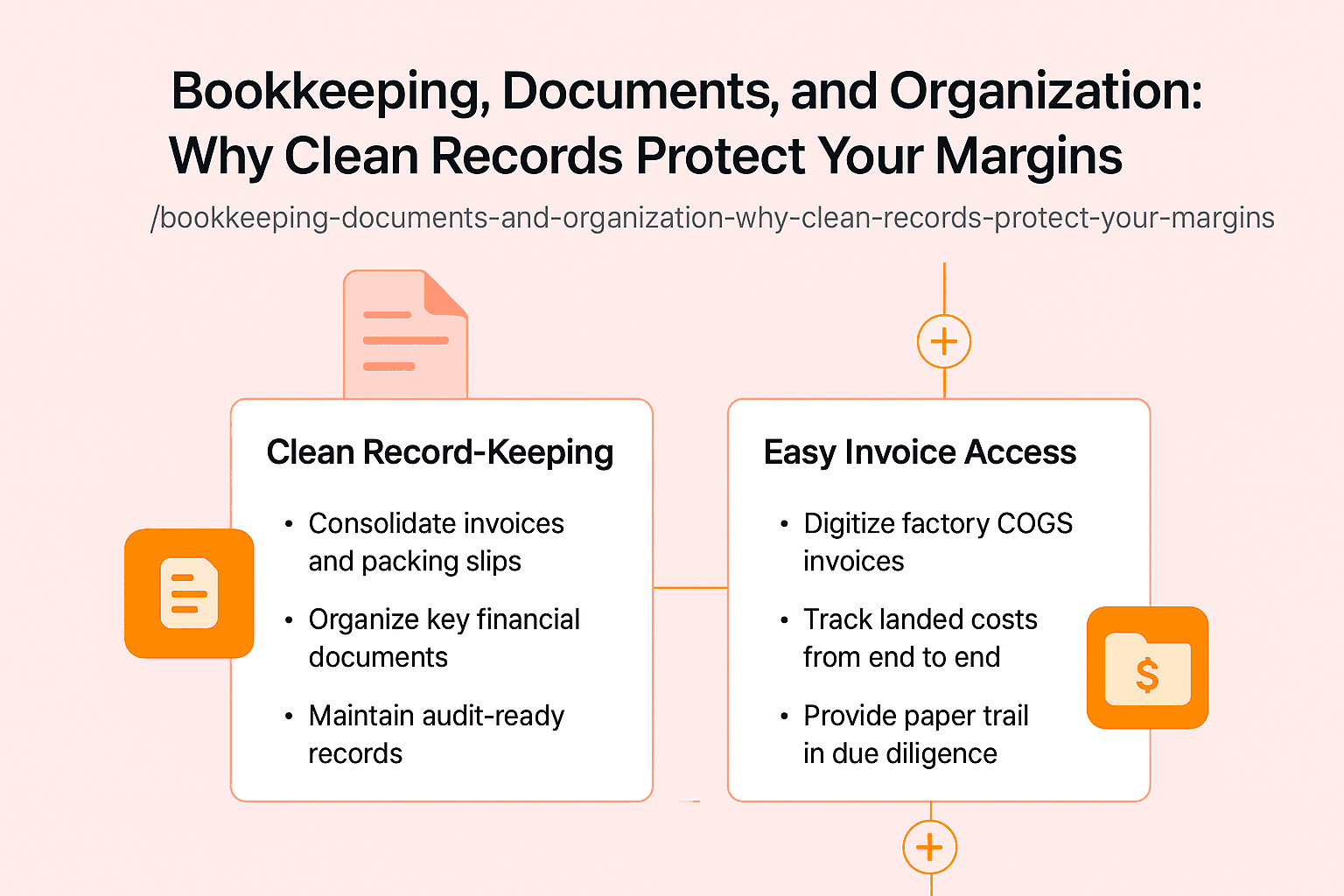
3. Keep Your Books Audit-Ready
This is where SellerVue becomes the differentiator.
Clean, transparent, SKU-level landed cost data gives buyers confidence—and reduces diligence friction.
4. Build Transferability, Then Step Back
If the business can run without you, buyers bid higher.
If the business depends on you, buyers discount aggressively.
The Bottom Line
A great eCommerce exit is a design.
Not an accident.
You don’t wait until the last minute.
You don’t wait until you’re burned out.
You don’t wait until your numbers dip.
You build the business, document the systems, optimize the margins…
and then you stop before laying the final brick.
Leave the buyer something exciting to build.
Leave them a story they can believe in.
Leave them a path to expand.
That little piece of future opportunity—
that “carrot”—can add millions to your final valuation.
And if you’re serious about preparing for a strategic exit in the next 24 months, SellerVue is built for exactly this moment.
Clean data.
Clean financials.
Clean story.
Everything buyers want to see—
before you hand them the last brick.